
RoboCT's Rehab Exoskeleton Assisted in the 1st Domestic Case of "Brain-Spine-Machine" Integrated Rehabilitation Case
Release time:2026-03-27
Related article

Recently, in the orthopedic research ward of Tongji Hospital affiliated with Tongji University, Mr. YE, who had been paralyzed for six months due to spinal cord injury, stood up steadily with the help of RoboCT's lower-limb exoskeleton, taking a historic step on his road to rehabilitation. This successful trial is the first time in China that three cutting-edge technologies—non-invasive EEG interface, spinal cord electrical stimulation, and exoskeleton robot—have been integrated and applied to the treatment of spinal cord injury.
Six months ago, an accident caused Mr. YE to suffer a spinal cord injury in his thoracic region, leaving him with lower-limb muscle strength of only grade 0-1, making even simple leg lifting a luxury. After undergoing spinal fixation surgery, spinal cord stimulation implantation, and a long rehabilitation process, he is still unable to stand. The physical confinement and psychological torment nearly drove him to give up.
Now, under the guidance of Professor CHENG Liming's team at Tongji Hospital, Mr. YE wears a non-invasive EEG interface device and a rehab exoskeleton from RoboCT. When he has the thought of "taking a step with his left foot," the EEG signal is instantly captured, amplified, and decoded, transforming it into instructions that are transmitted to the robot. At the same time, the spinal cord stimulation chip implanted in his body precisely activates the nerves in his lower limbs, working in synergy with the exoskeleton to help him complete a series of complex movements such as flexion, extension, stepping, and weight-bearing.
In this brain-spine-machine integrated closed loop, RoboCT's exoskeleton plays a dual role as both the "final executor" and the "co-regulator." It not only responds to brainwave intentions but also receives real-time feedback data from spinal cord electrical stimulation, dynamically adjusting gait, cadence, and stride length to achieve true human-machine integration. Looking to the future, RoboCT will continue to adopt an open approach, becoming a key bridge connecting neural regeneration and functional recovery, enabling more people like Mr. YE to stand again and walk further.
Share:


 Being Reported on CCTV-13 News Programme Zhao Wen Tian Xia ! Experiencing RoboCT Technology's Rehab Exokeleton!
2025-02-08
Being Reported on CCTV-13 News Programme Zhao Wen Tian Xia ! Experiencing RoboCT Technology's Rehab Exokeleton!
2025-02-08
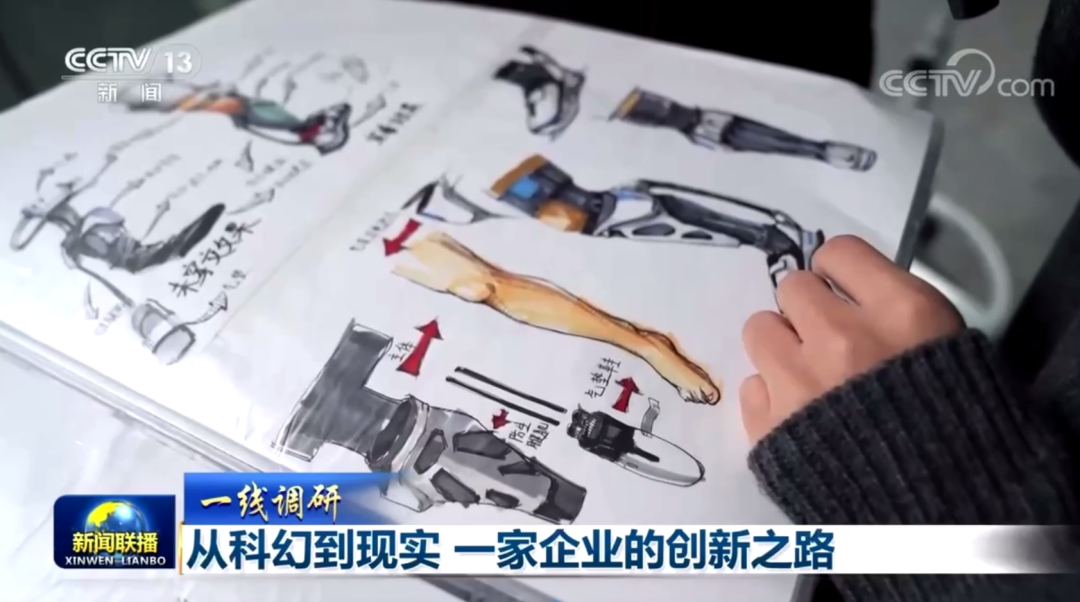 Exoskeletons are Hotly Discussed , and RoboCT has been Featured in CCTV News
2023-02-09
Exoskeletons are Hotly Discussed , and RoboCT has been Featured in CCTV News
2023-02-09
 Harbin Engineering University President YIN Jingwei Visited Alumni Company, to Deepen Industry-Academia-Research Collaboration.
2026-03-27
Harbin Engineering University President YIN Jingwei Visited Alumni Company, to Deepen Industry-Academia-Research Collaboration.
2026-03-27
 Making Walking Easier! RoboCT's GoGo-H Exoskeleton Debuted in Shanghai!
2026-03-27
Making Walking Easier! RoboCT's GoGo-H Exoskeleton Debuted in Shanghai!
2026-03-27
 LIU Jie, Deputy Secretary of the Provincial Party Committee and Governor of the Zhejiang Province, Visited RoboCT Technology
2026-03-20
LIU Jie, Deputy Secretary of the Provincial Party Committee and Governor of the Zhejiang Province, Visited RoboCT Technology
2026-03-20
 RoboCT Showcased its Products at the 2026 Guangzhou Welfare Exhibition, Bringing Exoskeleton Products to Household
2026-03-13
RoboCT Showcased its Products at the 2026 Guangzhou Welfare Exhibition, Bringing Exoskeleton Products to Household
2026-03-13
 RoboCT Donated Exoskeleton Equipment to the Hong Kong Red Cross!
2026-03-06
RoboCT Donated Exoskeleton Equipment to the Hong Kong Red Cross!
2026-03-06
 RoboCT's Exoskeleton was Showcased at the 2026 Guangxi (Macau) Promotion Conference, Jointly Exploring New Models of Elderly-care!
2026-03-06
RoboCT's Exoskeleton was Showcased at the 2026 Guangxi (Macau) Promotion Conference, Jointly Exploring New Models of Elderly-care!
2026-03-06
 RoboCT has Secured Another 100 million RMB-level Series B+ Funding, Led by ABC Capital, to Accelerate the New Era of Human-machine Integration in the Exoskeleton Market!
2026-03-05
RoboCT has Secured Another 100 million RMB-level Series B+ Funding, Led by ABC Capital, to Accelerate the New Era of Human-machine Integration in the Exoskeleton Market!
2026-03-05
 RoboCT was Selected as One of the Experts and Typical Cases of Science &Technology Assistance for People with Disabilities
2025-11-07
RoboCT was Selected as One of the Experts and Typical Cases of Science &Technology Assistance for People with Disabilities
2025-11-07
Service Hotline
0571-28076520 | 89167832
sales@roboct.com
No.1326 West Wenyi Road, Yuhang District, Hangzhou, Zhejiang Province, China
No.20 Longquan Road, Yuhang District, Hangzhou, Zhejiang Province, China
No.9 Songhua Road, Xiangfang District, Harbin, Heilongjiang Province, China
Copyright © RoboCT 2023 Zhejiang ICP No.18034163-1